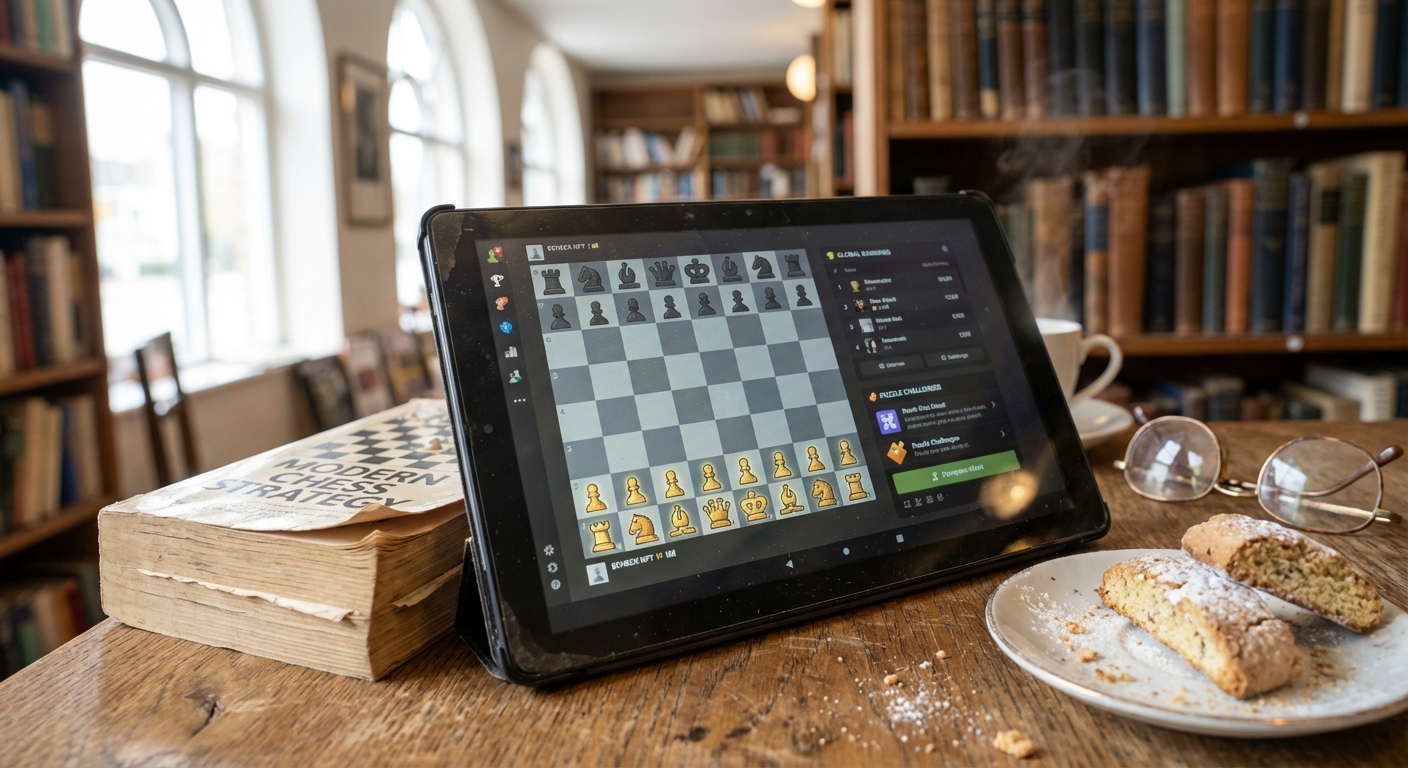
In the ever-evolving landscape of blockchain gaming, Anichess stands out by marrying the timeless strategy of chess with spell-infused mechanics and NFT-driven ownership. Developed by Animoca Brands in partnership with Chess. com, this free-to-play title transforms classic board battles into a persistent economy powered by the $CHECK token. Players don't just compete; they build lasting value through ladders, puzzles, and innovative rewards like Timewish, creating a chess NFT economy that rewards skill and longevity over fleeting hype.
The $CHECK token serves as the backbone of the Checkmate Ecosystem, a strategic currency that underpins creation, competition, and identity. With a total supply capped at 1 billion tokens, over 59% is earmarked for community and ecosystem growth, a conservative allocation that prioritizes long-term sustainability in my view. This isn't mere speculation fuel; $CHECK enables governance, in-game utilities, and rewards, letting players earn through matches, puzzles, and staking while shaping the platform's future.
The $CHECK Token: Powering Governance and Gameplay
At its core, $CHECK bridges traditional chess prowess with GameFi incentives. Holders use it for tournament entries, progression unlocks, and acquiring unique collectibles tied to NFT technology. The tokenomics reflect a player-centric design: active participants earn via gameplay, while governance empowers community decisions on updates and events. From my analysis, this structure mitigates common pitfalls in play-to-earn models by tying rewards directly to verifiable skill, reducing bot exploitation risks inherent in less rigorous systems.
$CHECK Token Allocation
| Category | Percentage | Amount (Tokens) |
|---|---|---|
| Total Supply | 100% | 1,000,000,000 |
| Community / Ecosystem | 59% | 590,000,000 |
| Rewards / Puzzles | 1% | 10,000,000 |
| Eternals Holders | 10% | 100,000,000 |
| Other (Utilities / Governance) | 30% | 300,000,000 |
Early data from events like Puzzle Summer underscores this efficacy. Players tackled spell-infused challenges, accumulating points for a slice of that 1% $CHECK pool. Such mechanics foster replayability, turning solitary puzzles into communal value generators within the chess NFT economy.

Ladders and Puzzles: Forging Competitive Depth
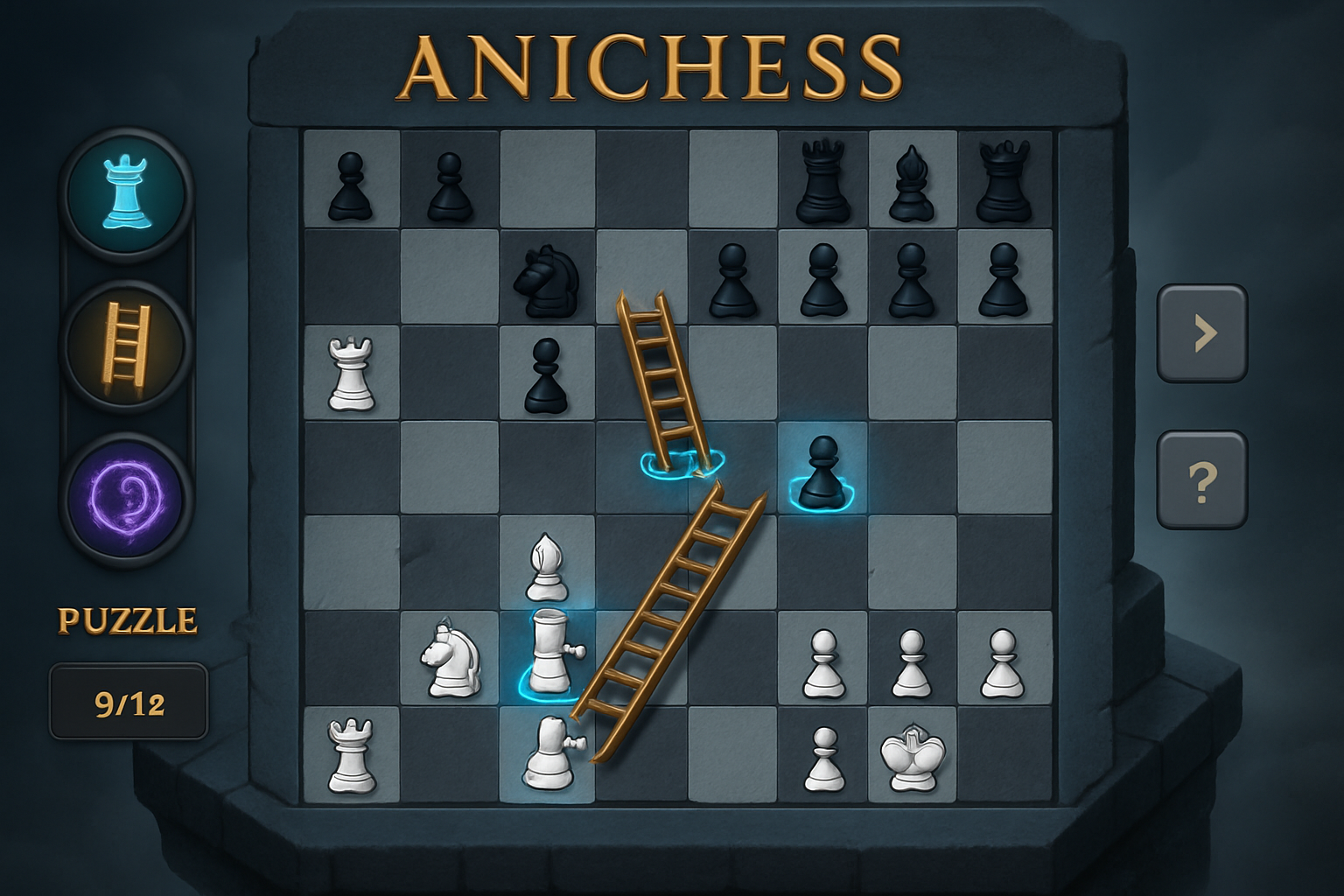
Anichess ladders introduce tiered rankings where victories propel climbers up leaderboards, mirroring chess's elo system but amplified by blockchain persistence. Your rank isn't ephemeral; it accrues tangible $CHECK rewards and NFT boosts, incentivizing consistent performance. This creates a meritocratic ladder that's as addictive as it is economically sound, top players sustain the ecosystem by drawing newcomers.
Puzzles elevate this further, blending tactical riddles with magical twists. Events reward solvers with tokens, directly injecting liquidity into the player base. In a sector rife with grindy loops, Anichess puzzles demand intellectual capital, aligning with my preference for assets where value stems from genuine utility rather than volume alone.
Timewish Rewards: Cultivating Persistent Participation
The Timewish Fountain exemplifies forward-thinking retention. This public staking pool offers a 1 and 1 $CHECK bonus, allowing anytime stake/unstake flexibility. While staked, players rack up Mate Points (M8) for monthly airdrops, blending yield farming with chess progression. It's a subtle yet powerful hook: casual players dip in for bonuses, while veterans compound holdings, stabilizing token velocity.
From an investment lens, Timewish mitigates volatility by locking emissions to engagement metrics. Paired with ladders and puzzles, it crafts a flywheel where skill begets tokens, tokens fuel competition, and competition hones skill, a virtuous cycle rare in nascent GameFi projects.
Genesis Ethernals NFTs elevate this ecosystem from mere gameplay to genuine asset ownership. This collection of 960 unique pieces, divided among six mystical tribes, grants holders a collective 10% share of the total $CHECK supply. Rewards scale with rarity, ensuring that rarer NFTs compound value over time through proportional airdrops. In my assessment, this tiered structure incentivizes collection without diluting scarcity, a smart counter to the oversupply issues plaguing many NFT projects.
Ethernals NFTs: Tiered Ownership and Boosts
These NFTs aren't static trophies. They unlock staking perks and in-game advantages, such as enhanced spell potency or ladder progression multipliers. Tribe affiliations foster social dynamics, where holders collaborate on governance proposals or exclusive events. Data from the launch reveals rapid floor price stabilization, signaling demand rooted in utility rather than speculation. For investors eyeing chess NFT economies, Ethernals represent a low-volatility entry: their $CHECK yields provide passive income, buffered by the token's community-heavy allocation.
New week, new plays, fam. 🤖♟️ Week 2 is already heating up, and the battlefield’s getting sharper. Whether you’re climbing through the ranks or defending your Top 20 spot like a true pro, the Wreck League Versus × @anichessgame campaign is where the action’s at. With Anichess’s TGE on the horizon, every move counts the grind is real, and so are the rewards. 💥 Here’s what’s at stake this week: 🏆 Top 20 in Wreck League Versus → Earn your share of the 3,200 $CHECK Anichess prize pool ♟️ Top 20 in Anichess Puzzles → Score exclusive Mech & Parts NFTs and a chance to win $TOWER rewards ⚙️ The event runs till November 10, so now’s the time to build smarter, battle harder, and play with purpose Start your week strong every match, every puzzle, and every move gets you closer to the top. Let’s see who’s built for the climb. 🚀 Wreck League Versus 🤖 by @towerecosystem
Integrating Ethernals with ladders amplifies persistence. A top-tier Eternal holder might dominate puzzles, converting wins into $CHECK that further appreciates their NFT via staking. This synergy crafts interlocking economies, where NFTs appreciate through ecosystem growth rather than isolated hype cycles. Traditional chess platforms lack this depth; Anichess turns pawns into persistent capital.
| Rarity Tier | Supply | $CHECK Reward Share | In-Game Boost |
|---|---|---|---|
| Common | 480 | Base 10% pool | Minor spell boost |
| Rare | 300 | 1.5x multiplier | Ladder entry fee waiver |
| Epic | 150 | 2x multiplier | Timewish yield and 20% |
| Legendary | 30 | 5x multiplier | Puzzle solve accelerator |
Community engagement extends beyond tokens. Anichess's free-to-play model lowers barriers, drawing Chess. com veterans into play-to-earn chess without upfront costs. Governance lets $CHECK holders vote on ladder adjustments or puzzle rotations, democratizing evolution. Early metrics from Puzzle Summer show participation spikes correlating with token unlocks, validating the flywheel: engagement drives value, value spurs engagement.
Risks and Long-Term Viability
Conservatively, no GameFi project is risk-free. $CHECK's success hinges on sustained player retention amid broader market shifts. Botting remains a threat to ladders, though spell mechanics add verification layers absent in pure chess engines. Token velocity could inflate if emissions outpace burns from tournament fees. Yet, the 59% community allocation acts as a buffer, funding buybacks or liquidity pools as needed.
Comparing to peers, Anichess outperforms in utility focus. Where others chase viral metas, it embeds CHECK token GameFi into chess's infinite replayability. Projections based on current ladders suggest top 1% players could yield 5-10x entry stakes annually via compounded rewards, assuming moderate adoption growth.
Anichess ladders, puzzles, Timewish, and Ethernals coalesce into a resilient framework. Players craft empires where every check builds equity, every mate mints opportunity. This isn't transient play-to-earn; it's a blueprint for blockchain chess that endures, rewarding the strategic minds who recognize its depth early.


No comments yet. Be the first to share your thoughts!